
Blog
Common Jewellery Mistakes That Make Your Outfit Look Overdone


Jewellery should add intention, not noise. When the shine competes with your outfit, the overall look can feel heavy, busy, or less refined than you planned.
Most overdone styling comes from a few repeat habits that are easy to miss in the mirror. A small edit in scale, placement, or finish often creates a cleaner, more expensive-looking result.
Wearing Too Many Statement Pieces At Once
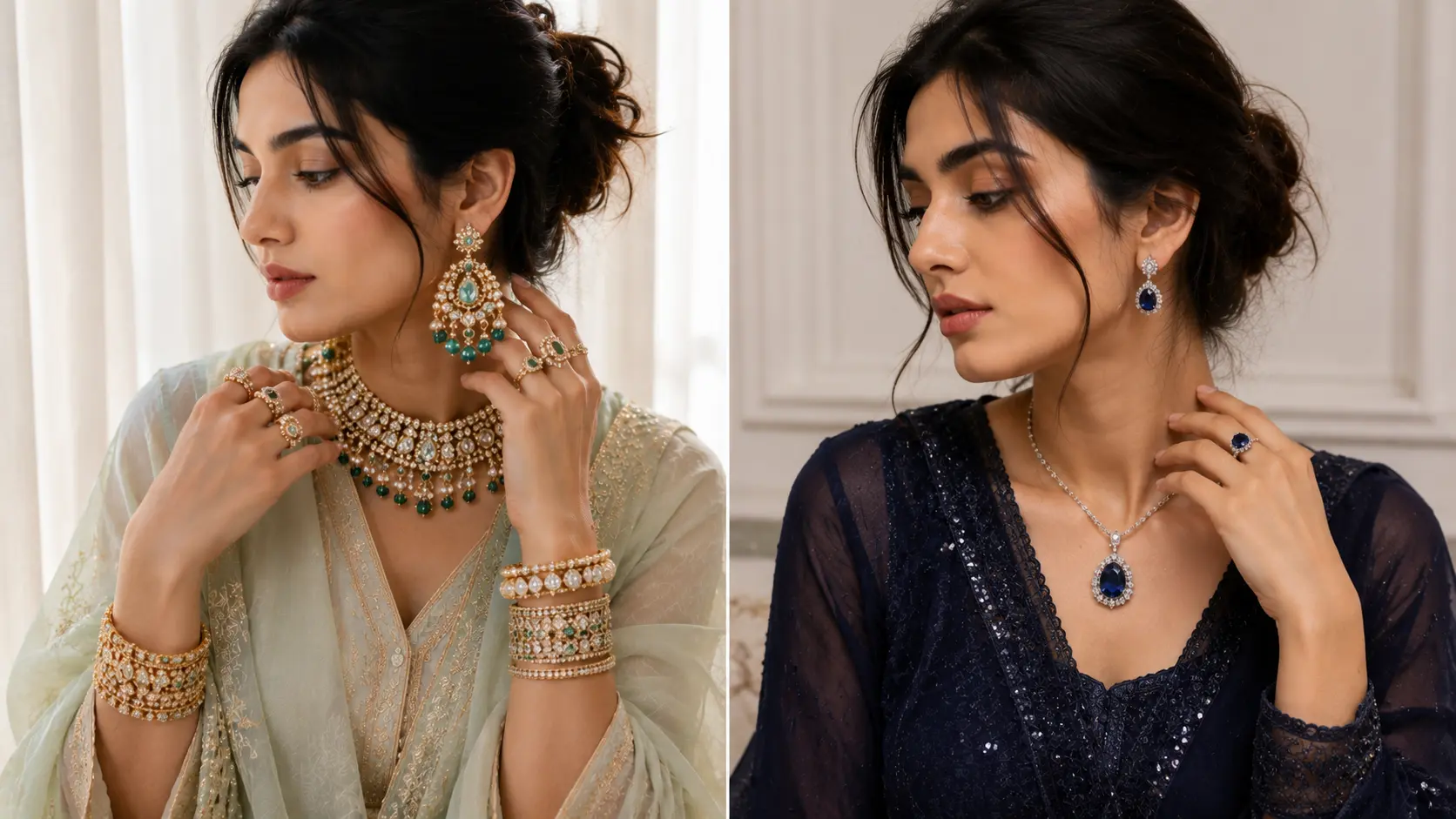
Statement jewellery works best when it has room to be the focal point. When large earrings, a bold necklace and stacked rings all fight for attention, the eye cannot settle.
A strong outfit usually has one hero piece and supporting details. If your jewellery feels loud, reduce the number of focal items before changing anything else.
- Pick one focal zone. Choose either ears, neck, or wrist as the main highlight.
- Keep the rest quiet. Use slimmer bands, a delicate chain, or small studs as support.
- Match the vibe. Sculptural pieces pair best with minimal clothing lines, while ornate pieces suit simpler necklines.
That single decision creates balance quickly and makes the statement look intentional.
Mixing Metals Without A Clear Plan
Mixed metals can look modern and effortless, but random mixing can read as accidental. The issue is rarely the combination itself and more often the lack of repetition.
When you repeat a metal at least twice, the mix looks designed. A two-tone ring, a watch with mixed hardware, or a necklace that blends finishes can act as a bridge.
- Repeat the dominant metal. Keep most pieces in one metal, then add a smaller accent metal.
- Use a connector piece. Choose one item that already contains both tones.
- Mind the undertone. Warm gold flatters warm palettes, while silver often suits cooler palettes, but either can work when repeated.
Once the metals feel deliberate, everything looks cleaner even with the same number of pieces.
Ignoring Necklines And Collar Details
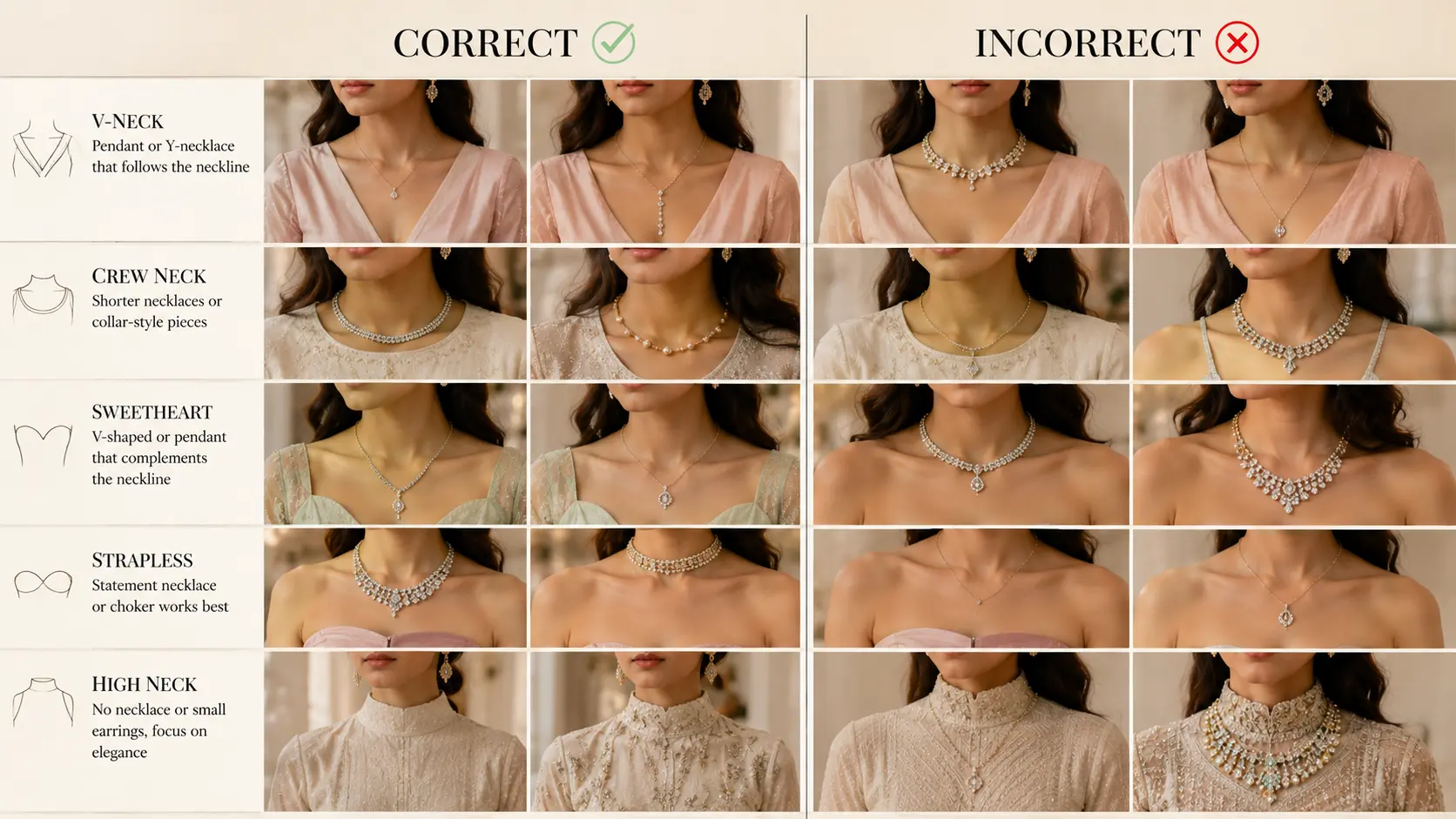
The neckline determines where jewellery should sit. When a necklace lands on a collar, clashes with a button placket, or competes with a busy print, the outfit can look crowded.
Good placement creates a clear frame for your face and keeps attention on the outfit, not on awkward layering. This is one of the fastest ways to avoid an overdone look.
| Neckline Or Detail | Common Jewellery Mistake | Better Styling Choice |
|---|---|---|
| High Neck And Turtleneck | Chunky necklace sitting on fabric and adding bulk | Long pendant or statement earrings with a clean neck |
| V Neck And Wrap Styles | Necklace length that stops above the V and breaks the line | Drop pendant that follows the V shape |
| Collared Shirt | Short necklace tangled in the collar points | Open collar with a medium chain or skip necklace and wear hoops |
| Strapless And Off Shoulder | Heavy necklace and heavy earrings together | Choose one focal piece and keep the other minimal |
When jewellery supports the neckline, the outfit looks styled rather than decorated.
Over Layering Necklaces Without Spacing
Layering can look chic, but layers need breathing room. When chains are too similar in length or thickness, they twist, stack into one line and look messy.
Clean layers usually use varied lengths and a clear hierarchy. One delicate chain, one medium link and one pendant often reads more polished than three similar pieces.
- Set a base length. Choose the shortest chain that sits comfortably above the neckline.
- Add contrast. Pick a second chain with a different texture or link style.
- Finish with intention. Use a pendant or lariat as the longest piece to anchor the set.
- Check movement. Walk and turn your shoulders to see if the chains tangle or flip.
Once the spacing works, layered necklaces look purposeful and light.
Choosing The Wrong Scale For Your Frame
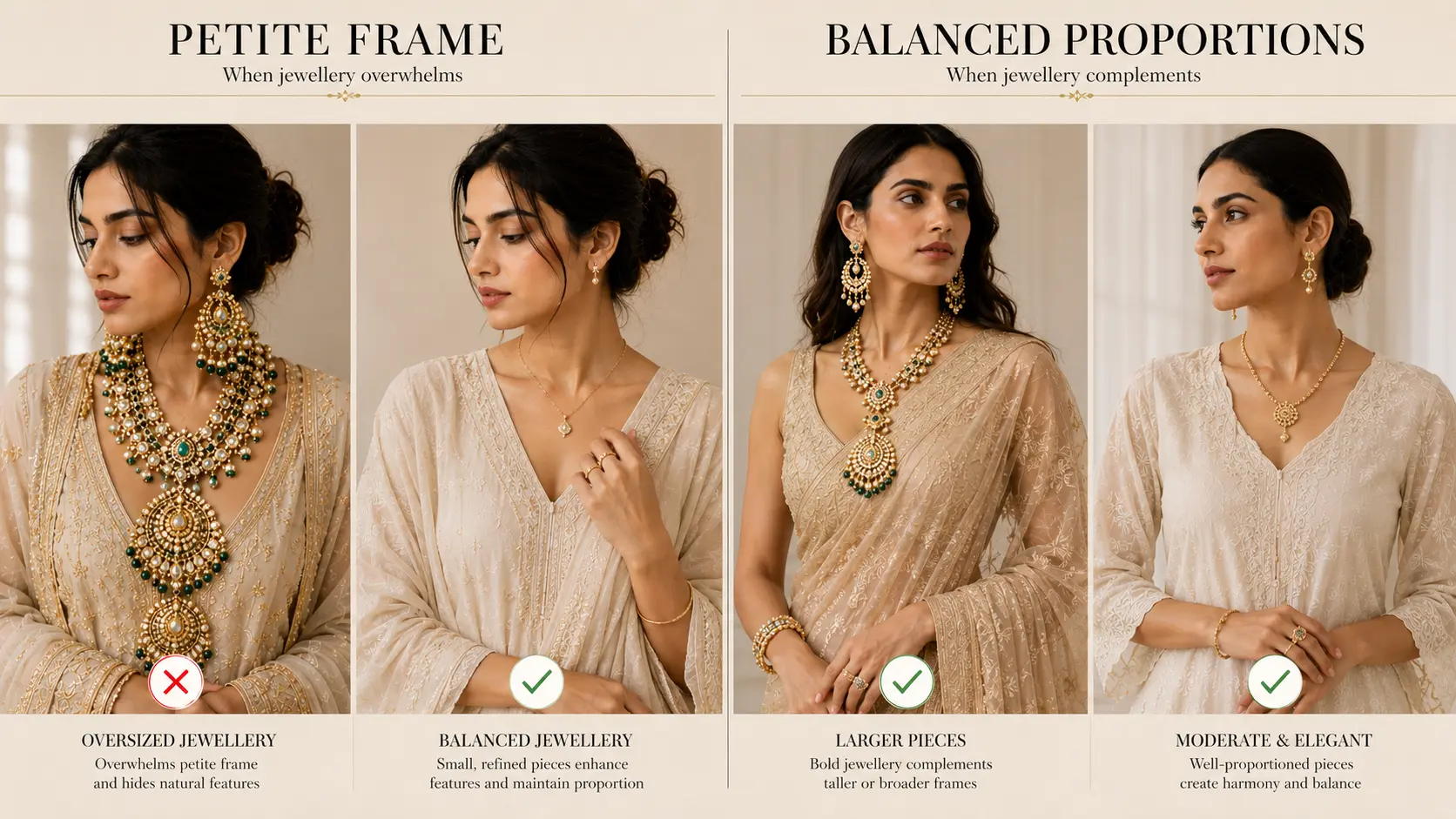
Scale is about proportion, not rules. Oversized pieces can look fashion-forward, but they can also overpower a petite frame or compete with structured tailoring.
Similarly, jewellery that is too tiny can disappear and make the outfit feel unfinished. Aim for pieces that echo your outfit’s visual weight, such as bold jewellery with simple silhouettes or slimmer jewellery with detailed clothing.
- Balance volume. If your top has puff sleeves or heavy texture, choose sleeker jewellery.
- Support minimal outfits. A simple dress can handle a larger cuff or bold earrings.
- Use your face shape. Long drops elongate, while rounded hoops soften sharp lines.
When the scale matches the outfit and your features, the look reads intentional instead of too much.
Stacking Rings And Bracelets Until They Look Cluttered
Stacks can look stylish, yet clutter happens when everything is the same width or when pieces are packed without negative space. Noise often shows up as constant clinking, overlapping shapes and a lack of a clear anchor.
A better approach is to build around one stronger piece. Let one signet ring, one gemstone ring, or one watch lead, then keep the rest slimmer.
- Keep one hero item. Choose one ring or bracelet that carries the visual weight.
- Use spacing. Leave one finger bare or separate bracelets with a small gap.
- Limit competing motifs. Too many hearts, stars, pearls and charms together can look busy.
With a clearer structure, stacks look curated rather than accidental.
Wearing Jewelry That Competes With Prints And Texture
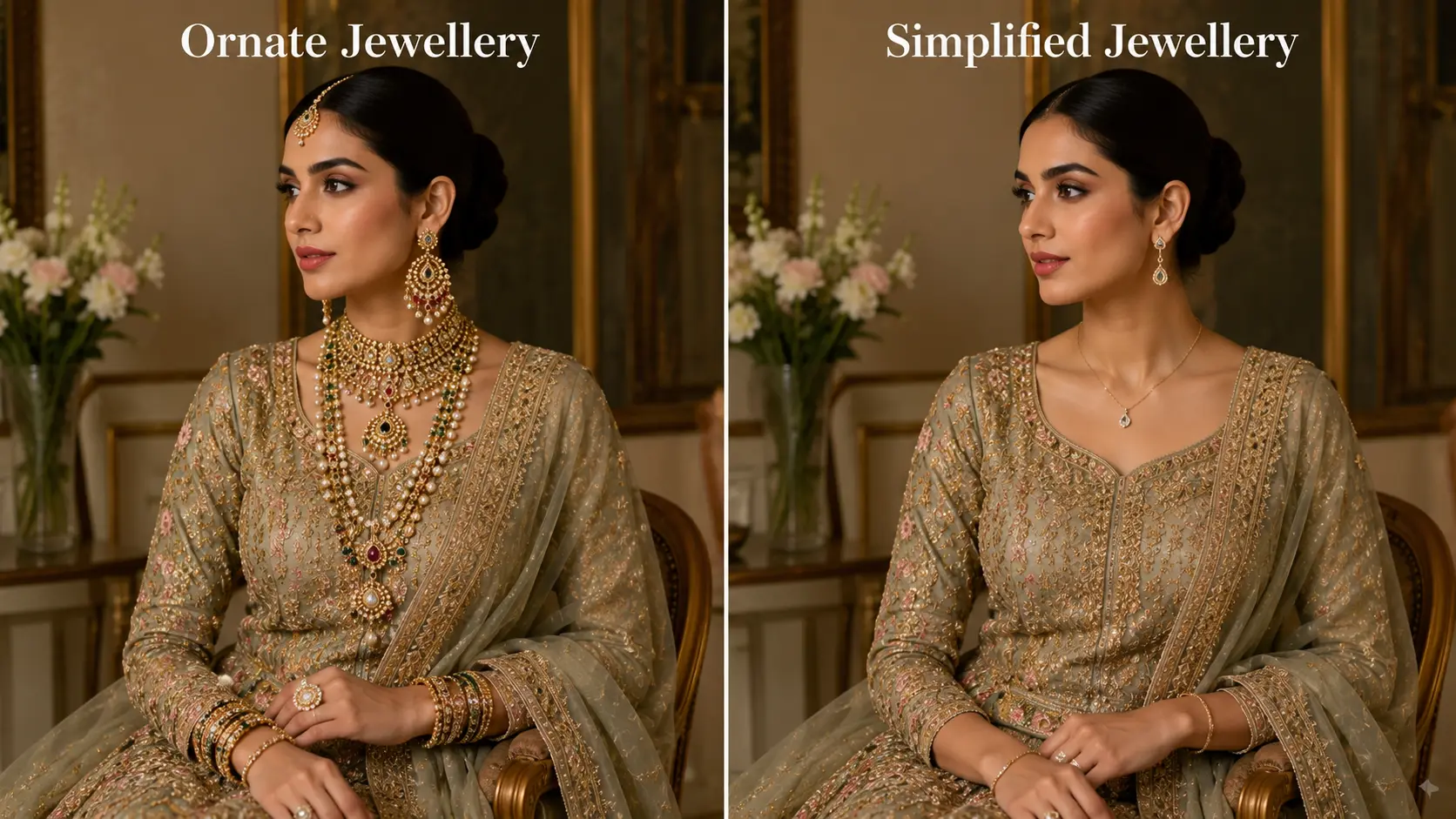
Prints, embroidery, sequins, lace and heavy knits already add visual detail. If jewellery adds the same level of complexity, the outfit can feel over-styled.
When clothing is detailed, choose jewellery that brings shape and shine without extra pattern. Smooth hoops, a simple chain, or a single cocktail ring often lands better than ornate sets.
- Match complexity levels. Detailed outfit, simple jewellery. Simple outfit, bolder jewellery.
- Keep finishes cohesive. High sparkle plus high sparkle can feel intense in daylight.
- Prioritize clean silhouettes. Strong shapes read better than intricate filigree over busy fabrics.
This simple contrast is what makes styling look effortless.
Skipping Edit Checks In Natural Light
Indoor lighting can flatter sparkle and hide overcrowding. Natural light shows the true brightness, the real scale and whether pieces reflect too much against your skin.
A quick edit check helps you catch what feels overdone. Look for tangles, overlapping pendants, uneven earrings and anything that distracts from your face.
- Take a half-step back. View the whole outfit, not just the jewellery close up.
- Turn side to side. Check if earrings and necklaces fight with hair, collars, or straps.
- Remove one item. If the outfit instantly looks calmer, you found the excess.
This quick routine makes day-to-day styling easier and more consistent.
Conclusion
Jewellery mistakes that make an outfit look overdone usually come down to competition, not the pieces themselves. Reduce the number of focal points, align jewellery with necklines and keep scale and finishes consistent.
When you build around one clear statement and let everything else support it, the outfit looks polished, confident and personal. A small edit often does more than adding one more piece.