
Blog
How to Choose the Right Necklace Length for Your Neckline?


Necklace length is the quiet detail that decides whether a look feels polished or slightly off. The right placement frames your face, follows your neckline and keeps pendants from competing with your outfit.
Instead of guessing, use a few consistent checks to match proportions, layers and closures to what you are wearing. With a small set of rules, choosing necklace length becomes fast and reliable.
Why Necklace Length Changes The Whole Look?
A necklace sits on a moving part of the body, so its visual impact depends on where it lands. A few centimeters can shift attention from your face to your chest or from your collarbone to your neckline edge.
Length also affects comfort and function. Shorter chains can feel restrictive if the clasp sits high, while longer styles may tangle or swing into your neckline.
Know The Standard Necklace Lengths
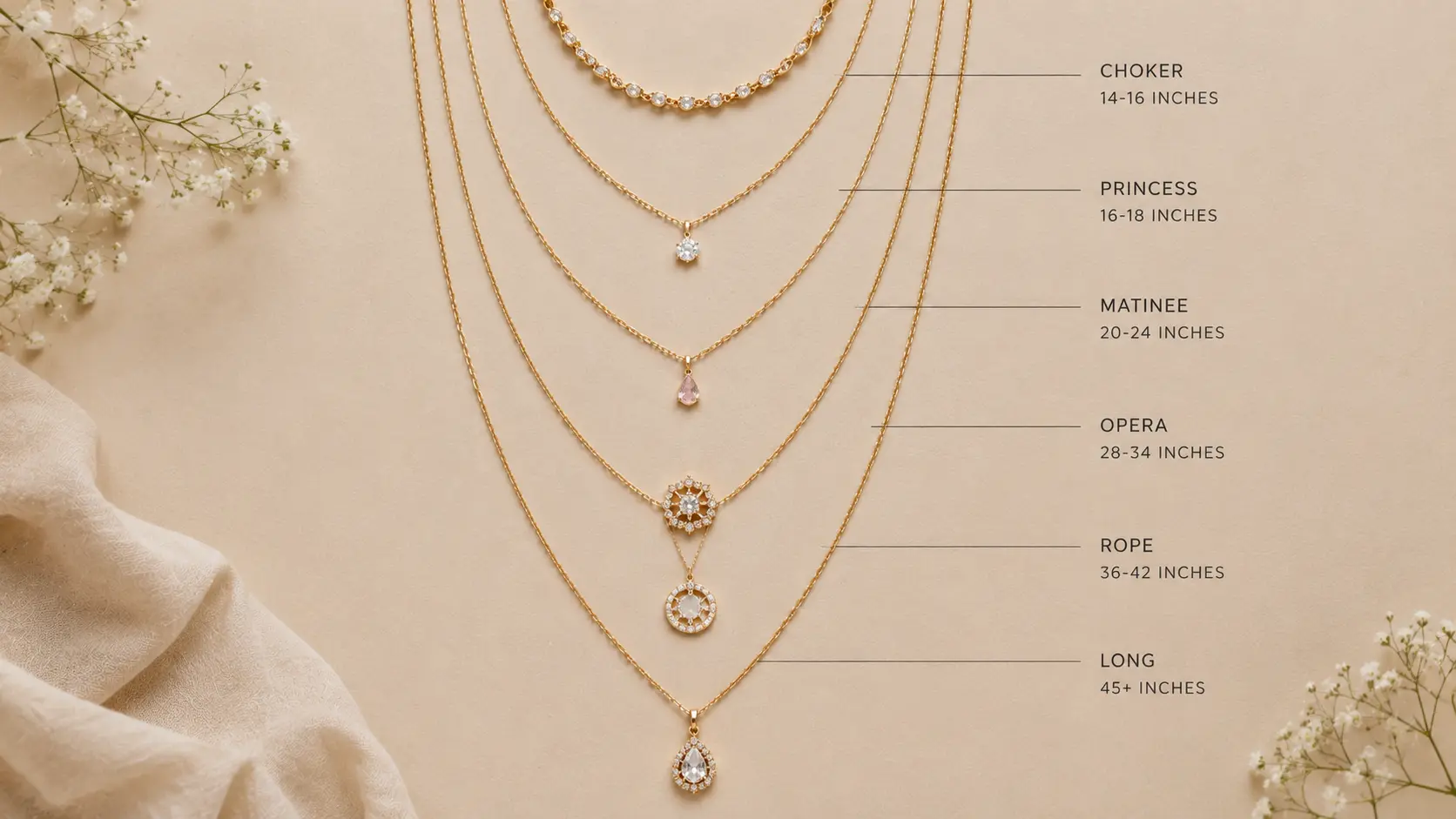
Most necklaces fall into a few common ranges and each range has a predictable landing point. Knowing these anchors helps you choose quickly even when shopping online.
Use the table as a starting guide, then fine tune for your height, neck size and the thickness of the chain.
| Necklace Length | Typical Landing Point | Best Use |
|---|---|---|
| 35 to 40 cm | High neck or base of neck | Minimal chains, close fitting looks |
| 45 cm | Collarbone area | Everyday pendants and simple layering |
| 50 to 55 cm | Upper chest | Statement pendants and open necklines |
| 60 to 70 cm | Mid chest | Long pendants and elongating vertical lines |
These ranges are guidelines, not rules. Small changes in pendant size, chain thickness and clasp style can change where a necklace appears to sit.
Measure For A Reliable Fit
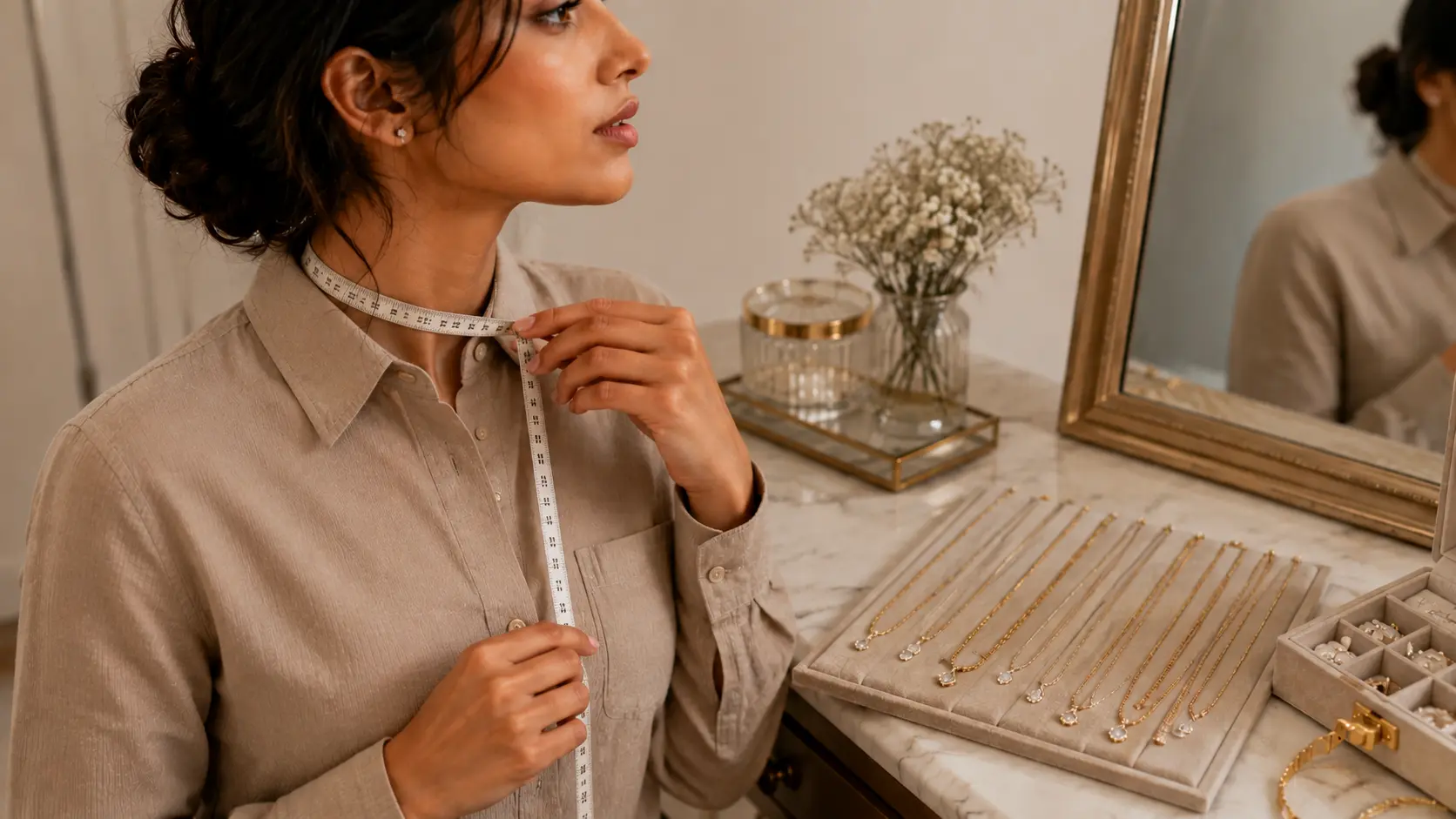
Accurate measurement prevents returns and avoids awkward placement. A soft measuring tape is best, but a string and ruler work well too.
- Measure your neck. Wrap the tape where a choker would sit and note the number without pulling tight.
- Add ease. Add 2 to 5 cm for comfort depending on whether you want a snug or relaxed fit.
- Check your neckline depth. Estimate where the neckline ends on your chest so the necklace does not land on the edge.
- Account for pendants. Add the pendant drop to your target length so the focal point lands where you want it.
Once you know your target landing point, you can shop by length with more confidence. You will also spot when an extender could solve a close call.
Match Necklace Length To Neckline Shape
Necklines create a frame and necklaces look best when they either mirror that frame or sit clearly inside it. The simplest rule is to avoid having the chain land exactly where the neckline ends.
That edge-on-edge placement looks crowded and can make both pieces feel accidental. Aim for clean separation.
Crew Neck And High Neck Tops
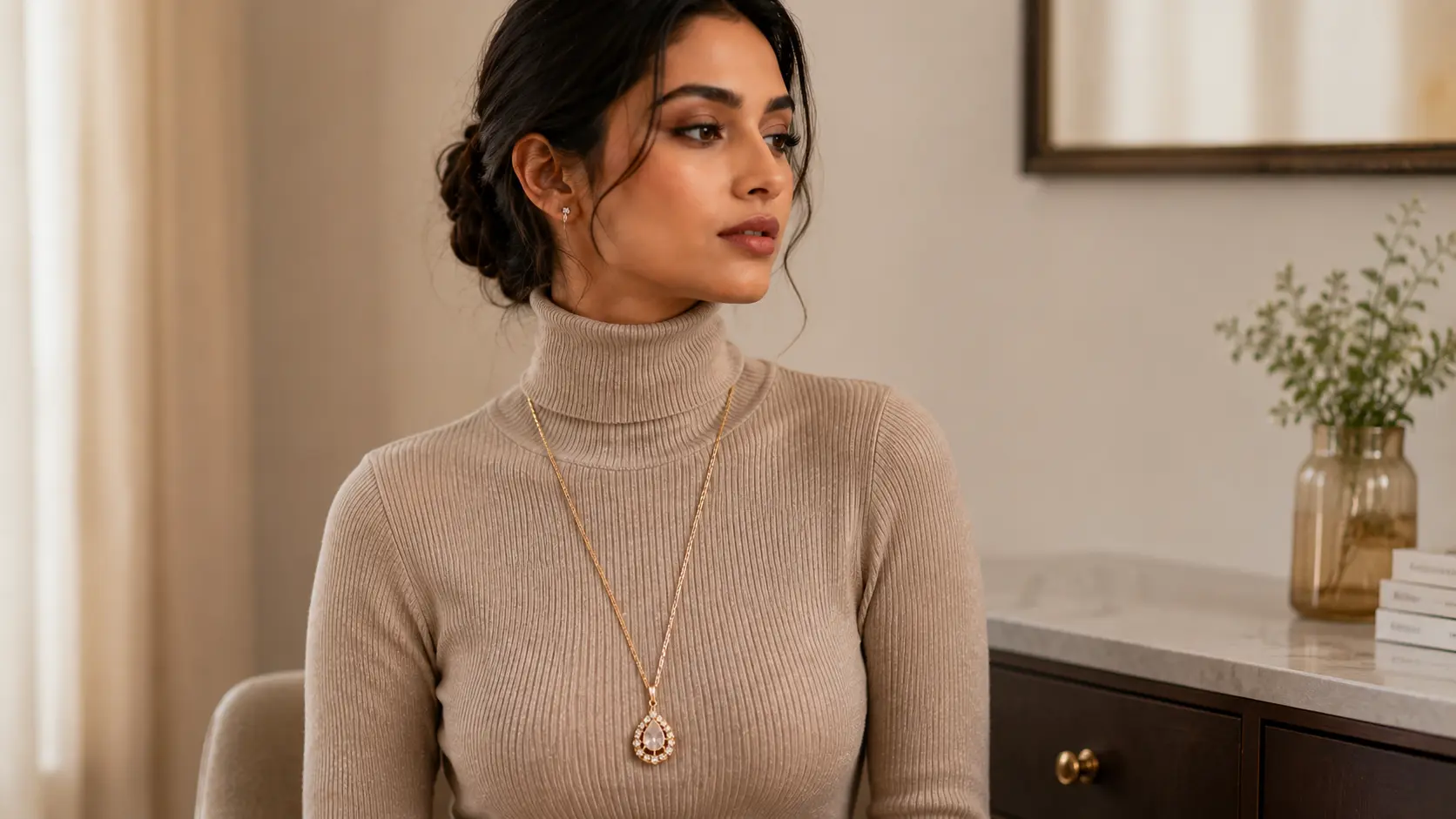
High necklines give little open space, so short necklaces can disappear. A longer chain that drops below the neckline creates a vertical line and keeps the jewelry visible.
Choose a pendant length that clears the fabric by several centimeters. This prevents the pendant from catching and keeps the look intentional.
V Neck And Plunge Necklines
V necklines pair well with necklaces that follow the same direction. A pendant that sits within the V looks balanced and naturally draws the eye upward.
Keep the pendant point above the deepest part of the neckline. This avoids a crowded center and reduces skin-on-metal movement.
Scoop Neck And Round Necklines
Round necklines suit collarbone lengths and medium drops depending on the depth. A rounded strand or a soft pendant curve complements the shape.
If the scoop is deep, move longer so the necklace fills the open area without touching the neckline edge.
Square Necklines
Square necklines look sharp, so necklaces with clean geometry work well. Medium lengths that sit just above the square opening keep the lines crisp.
A short, structured necklace can also work if it sits above the fabric line and does not compete with the corners.
Off The Shoulder And Bardot Necklines
These styles expose the collarbone and shoulders, so collarbone lengths can be very flattering. A delicate chain at 40 to 45 cm highlights the open area without dropping too low.
If you prefer a bolder look, choose a shorter statement piece that sits above the collarbone and stays stable when you move.
Strapless And Sweetheart Necklines
Strapless looks create a wide open canvas, which can handle medium and longer lengths well. A 45 to 55 cm necklace often sits in the center and balances bare shoulders.
Sweetheart shapes already create a focal point, so avoid a pendant that lands exactly on the heart curve. Place it slightly above or clearly below.
Turtlenecks
Turtlenecks work best with longer chains that sit on top of the fabric. A pendant at mid chest length adds contrast and keeps the outfit from feeling flat.
Choose a chain weight that matches the knit thickness. Very fine chains can look delicate but may get lost on chunky textures.
Consider Your Body Proportions And Outfit Balance
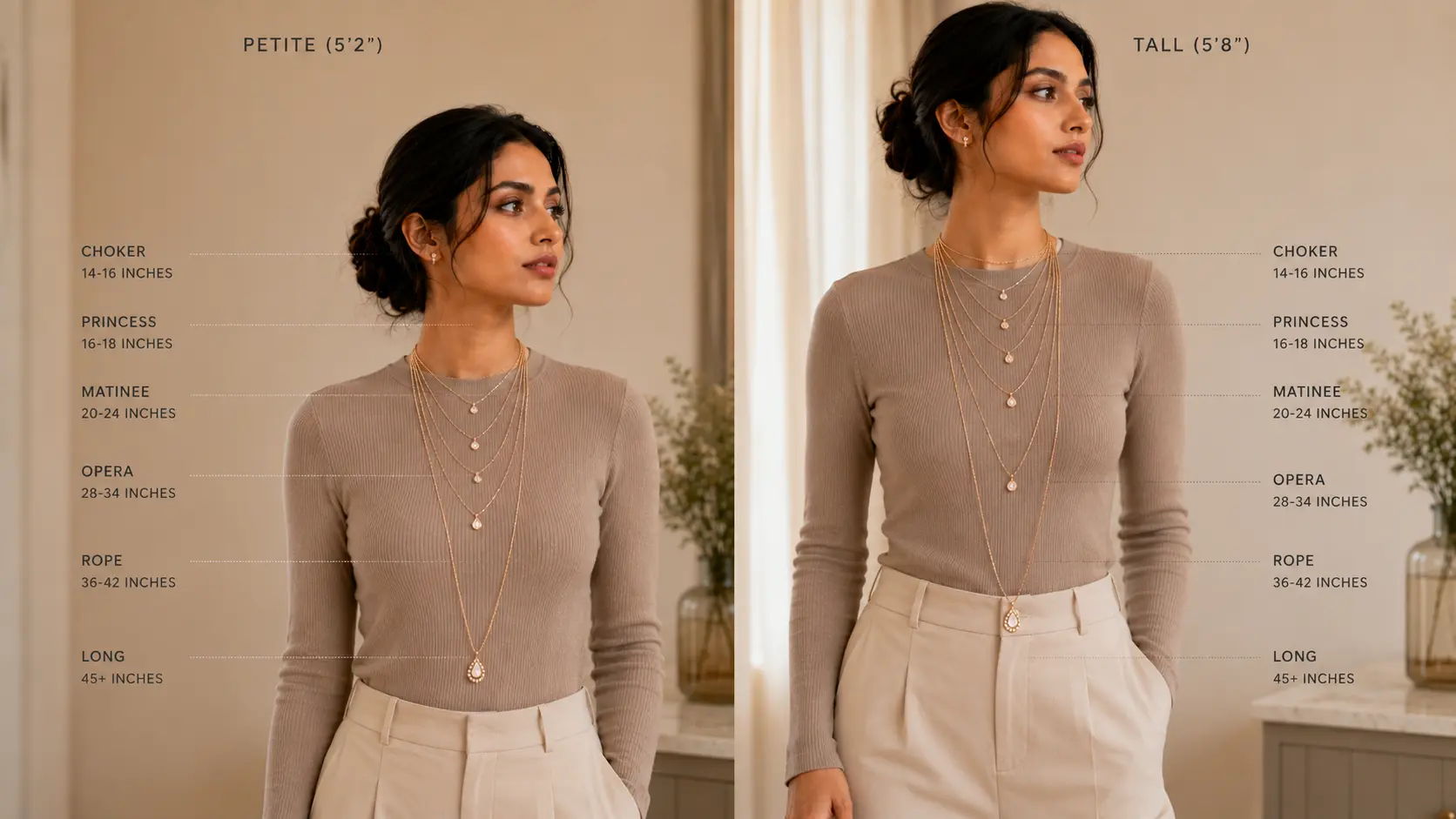
Necklace length is part of overall proportion. If you are petite, extremely long necklaces can overwhelm, while very short chokers can shorten the neck visually on some people.
If you are tall or have a longer torso, mid chest lengths often look natural and balanced. The goal is a harmonious visual line, not a fixed number.
- Neck length. Longer necks can carry shorter styles easily, while shorter necks often look more open with collarbone or longer lengths.
- Shoulder width. Wider shoulders pair well with slightly longer or bolder necklaces that add vertical emphasis.
- Bust line. Avoid having a pendant rest directly at the fullest point if you want a smoother line and less movement.
These checks help you choose a length that flatters without feeling like you are following strict rules. Small adjustments often create the best results.
Layering Rules That Prevent Tangles
Layering works when each necklace has a clear job and enough space. If two chains are too close in length, they twist together and the focal points compete.
Choose different textures and distinct drops so each layer reads separately. This also helps when mixing metals or adding charms.
- Start with a base length. Pick your shortest necklace based on the neckline and fit it comfortably.
- Add spacing. Add the next layer at least 5 cm longer so chains do not sit on the same line.
- Vary the focal point. Use one pendant statement and keep the other layers simple.
- Stabilize with weight. If a chain flips, choose a slightly heavier chain or a different clasp style.
After you set the spacing, check how the layers move when you sit and turn. A good layered set should stay readable and comfortable.
Chain Thickness, Pendant Size And Clasp Details
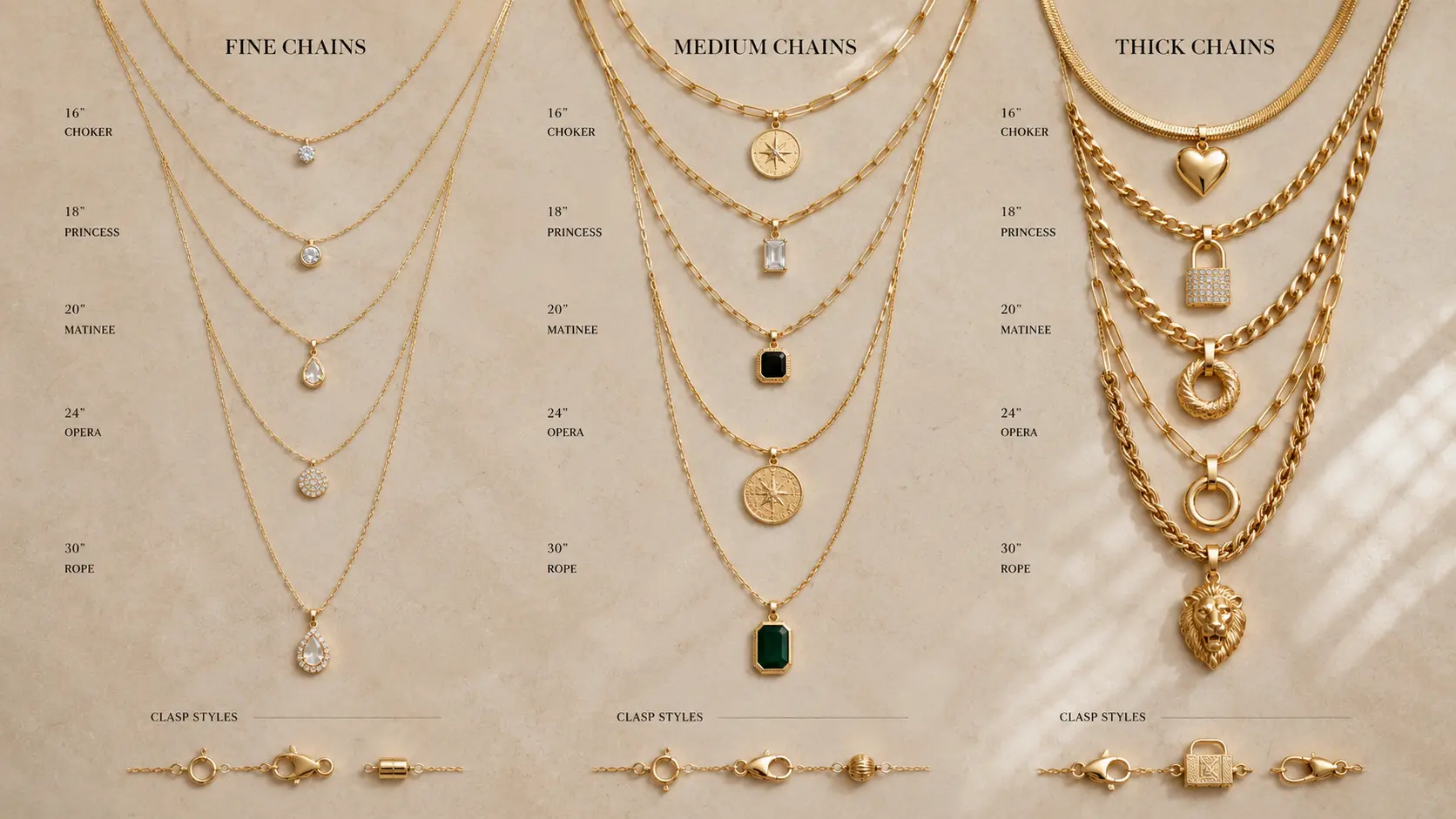
Length is only half the story, because thickness changes how a necklace sits. Thick chains ride higher and look shorter, while very fine chains can drape lower.
Pendants also change the visual drop. A tall pendant can add noticeable length even when the chain size stays the same.
- Fine chains. Best for subtle shine, easy layering and small pendants.
- Medium chains. Versatile for daily wear and most pendant sizes.
- Thick chains. Strong visual impact and better for simple neckline outfits with minimal pattern.
Clasp placement matters too. A bulky clasp can drift to the side, especially with heavy pendants, so consider a better balanced chain or a different closure style.
Choose Necklace Length For Different Occasions
Daily wear calls for comfort and flexibility, while events often prioritize statement and photography. Lighting and outfit structure can also affect how a necklace reads.
Keep your neckline and activity in mind. A long pendant may look great standing but can become distracting at a seated dinner.
- Work and errands. Collarbone and upper chest lengths stay neat and pair well with most tops.
- Formalwear. Match the necklace to the neckline opening and choose a focal point that sits in clean space.
- Active days. Shorter, stable lengths reduce swinging and catching on fabrics.
When in doubt, prioritize comfort and clear placement. A necklace you keep adjusting will never feel finished.
Common Mistakes To Avoid
Most necklace length issues come from tiny mismatches. Fixing them is usually as simple as choosing a different length or adding an extender.
- Landing on the neckline edge. It makes the jewelry and outfit look crowded and can cause rubbing.
- Ignoring pendant drop. The pendant changes the final landing point more than many people expect.
- Layering without spacing. Chains that are too close twist and hide each other.
- Overmatching scale. A very delicate chain can disappear against heavy fabrics, while a thick chain can overpower a fine neckline.
Small adjustments create big improvements. A 5 cm extender can turn an almost-right piece into a go-to favorite.
Conclusion
Choosing the right necklace length for your neckline comes down to placement, separation and proportion. Start with your neckline shape, choose a length that sits clearly inside or below it and account for pendant drop and chain thickness.
Measure once, keep a simple length guide and use extenders to fine tune. With these habits, your necklaces will look intentional across outfits, seasons and styling moods.