
Blog
How to Match Jewellery with Pakistani Dresses


How to Match Jewellery with Pakistani Dresses?
Matching jewellery with Pakistani dresses comes down to balance, proportion and a clear style direction. When the outfit, metals, stones and accessories support each other, the whole look feels intentional.
Pakistani fashion includes rich embroidery, bold colors and varied necklines, so jewellery can either elevate the details or compete with them. A few smart guidelines help you choose pieces that look graceful rather than heavy.
Start With The Dress Work And Fabric
The first step is reading the dress itself. Heavy zari, gota, dabka and sequin work already create sparkle, so jewellery should add structure and refinement, not more visual noise.
On simpler fabrics like lawn, cotton, or plain chiffon, jewellery can bring the statement. On jamawar, velvet, tissue and heavily embellished net, lean toward fewer pieces with stronger craftsmanship.
- Heavy embroidery: Choose one hero piece such as a choker, a statement jhumka, or a bold ring.
- Light embroidery: Add layered chains, bangles, or a more detailed earring without overloading the neckline.
- Plain fabric: Use jewellery to introduce texture through pearls, kundan, or carved metalwork.
Once you decide whether the dress is the star, it becomes easier to control how much shine and detail you add.
Match Jewellery To Neckline And Dupatta Draping
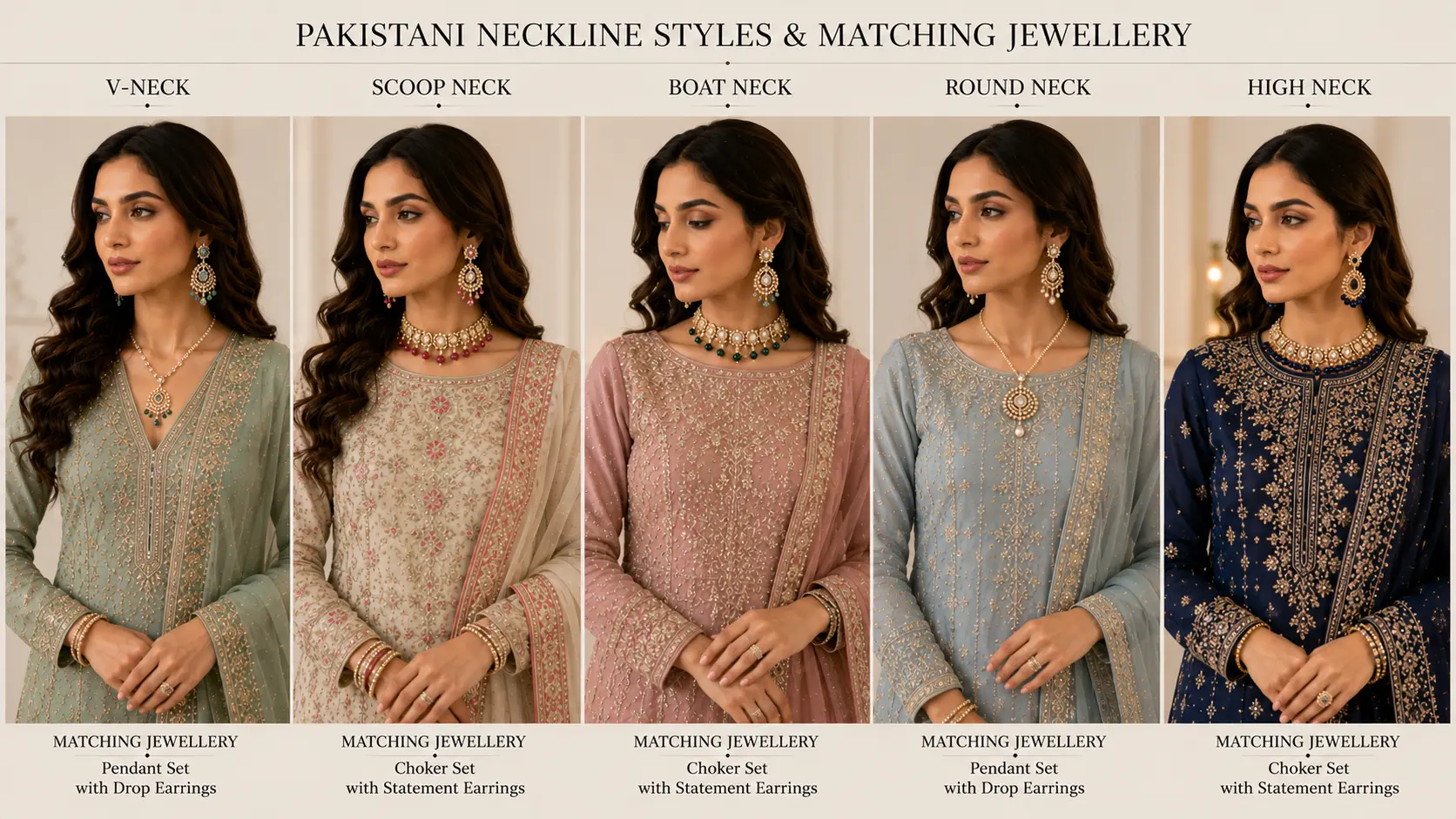
Neckline shape decides the best necklace length and earring weight. Dupatta draping also changes what remains visible, so it affects where you should place focus.
A high neckline often looks best with statement earrings and no necklace. A deeper neckline can carry a choker, a short necklace, or a longer chain depending on the width of the opening.
- Boat neck and wide necklines: A choker or short necklace fills space neatly and keeps symmetry.
- Round neck: A short pendant or simple rani haar style necklace follows the curve well.
- V neck: A drop pendant or tapered necklace complements the angle and lengthens the neck.
- High neck: Skip the necklace and choose jhumkas, chandbalis, or studs with a strong silhouette.
When the dupatta covers the chest, earrings, rings and bangles become more important than necklaces.
Choose The Right Metal Tone
Metal tone should respect the undertone of the dress and the embroidery color. Gold warms up reds, maroons, mustard and deep greens, while silver tones feel crisp with cool shades like blue, lilac and grey.
Antique gold and oxidized silver work beautifully with traditional craft, especially block prints, ajrak-inspired palettes and earthy solids. Rose gold sits between gold and silver and pairs well with blush, peach and soft neutrals.
- Warm outfits: Yellow gold, antique gold and polki styles usually look more harmonious.
- Cool outfits: Silver, white gold and diamonds or clear stones feel cleaner.
- Neutral outfits: Metals can be chosen based on the handbag, shoes, or makeup tone.
Keeping one dominant metal makes the look feel coordinated, even when you mix textures like pearls and stones.
Coordinate Stones And Colors Without Overmatching
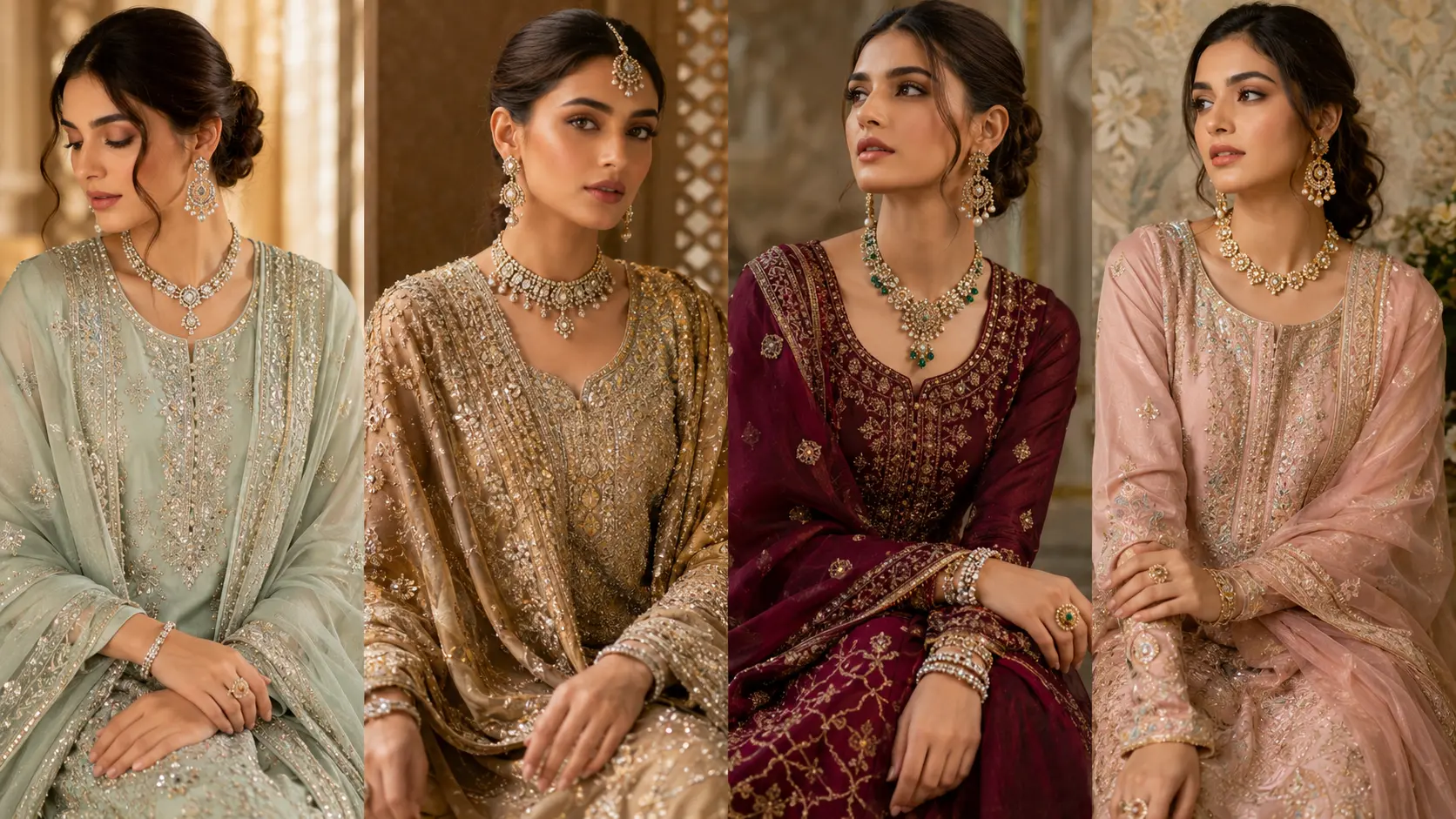
Stone color should connect to the dress but not copy it exactly. Matching every stone to the exact fabric color can look flat, while a controlled contrast adds depth.
Choose one main stone color and keep the rest neutral through pearls, clear crystals, or metal-only pieces. If the dress is multi-colored, pull the stone shade from the smallest repeated detail in the embroidery for a refined result.
- Red and maroon dresses: Kundan with pearls, emerald accents, or ruby tones look classic.
- Green dresses: Gold with pearls, clear stones, or deep green stones works well.
- Blue dresses: Silver tones with clear stones or sapphire shades stay elegant.
- Pastels: Pearls, rose gold and soft champagne stones feel light and modern.
Small contrast details often photograph better, especially under event lighting.
Balance Statement Pieces With Minimal Supporting Pieces
Pakistani jewellery sets can include a necklace, earrings, tikka, bangles and rings. Wearing every piece together is not always the best choice, especially with heavy dresses.
Pick one statement zone and keep the other zones simpler. This keeps the face and neckline clear and prevents a crowded look.
- Statement earrings: Wear a simple chain or skip the necklace, then add one or two bangles.
- Statement necklace: Choose small studs or petite drops, then keep wrists light.
- Statement tikka or jhoomar: Keep earrings smaller and avoid an oversized choker.
- Statement bangles: Keep necklace and earrings refined so the wrists stand out.
This approach also makes it easier to move comfortably, especially during long events.
Match Jewellery With Traditional Dress Types
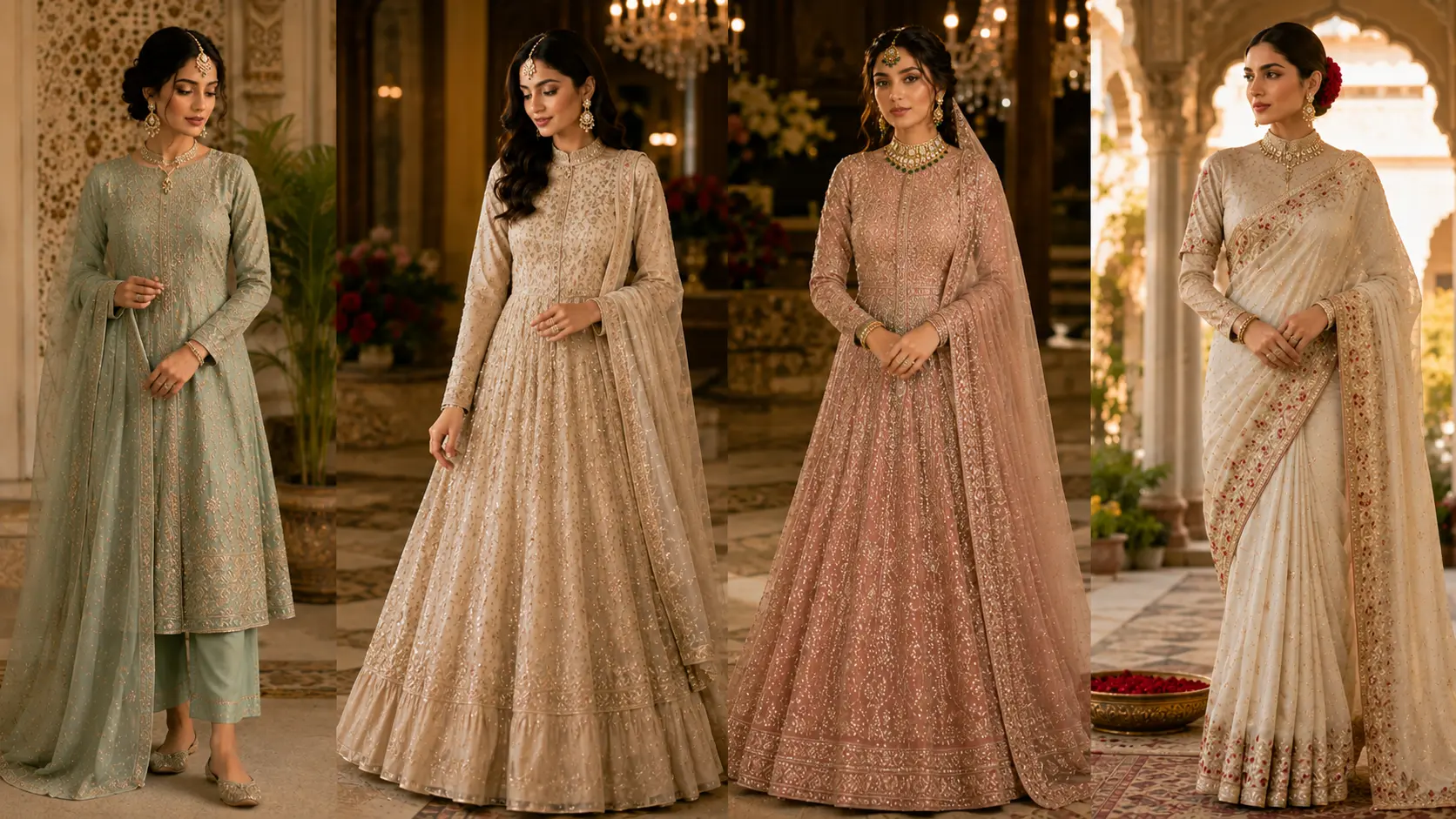
Different Pakistani dresses create different proportions, so the jewellery should follow the silhouette. A long straight shirt reads formal and sleek, while a lehenga or gharara has more volume and can handle stronger pieces.
Keep the overall vibe consistent. Traditional outfits usually suit kundan, polki, meenakari, pearls and antique finishes, while simpler cuts can take modern minimal jewellery.
| Dress Type | Best Jewellery Focus | What To Avoid |
|---|---|---|
| Shalwar Kameez | Jhumkas or a simple pendant with bangles | Oversized full sets with heavy embroidery |
| Anarkali | Choker or short necklace with balanced earrings | Very long necklaces that clash with the bodice |
| Lehenga Choli | Statement necklace or tikka with coordinated earrings | Too many competing statement pieces at once |
| Saree | Bold earrings and a clean necklace line | Necklaces that tangle with the pallu border |
Use the dress type as a guide, then refine choices based on neckline, embroidery and comfort.
Consider The Occasion And Time Of Day
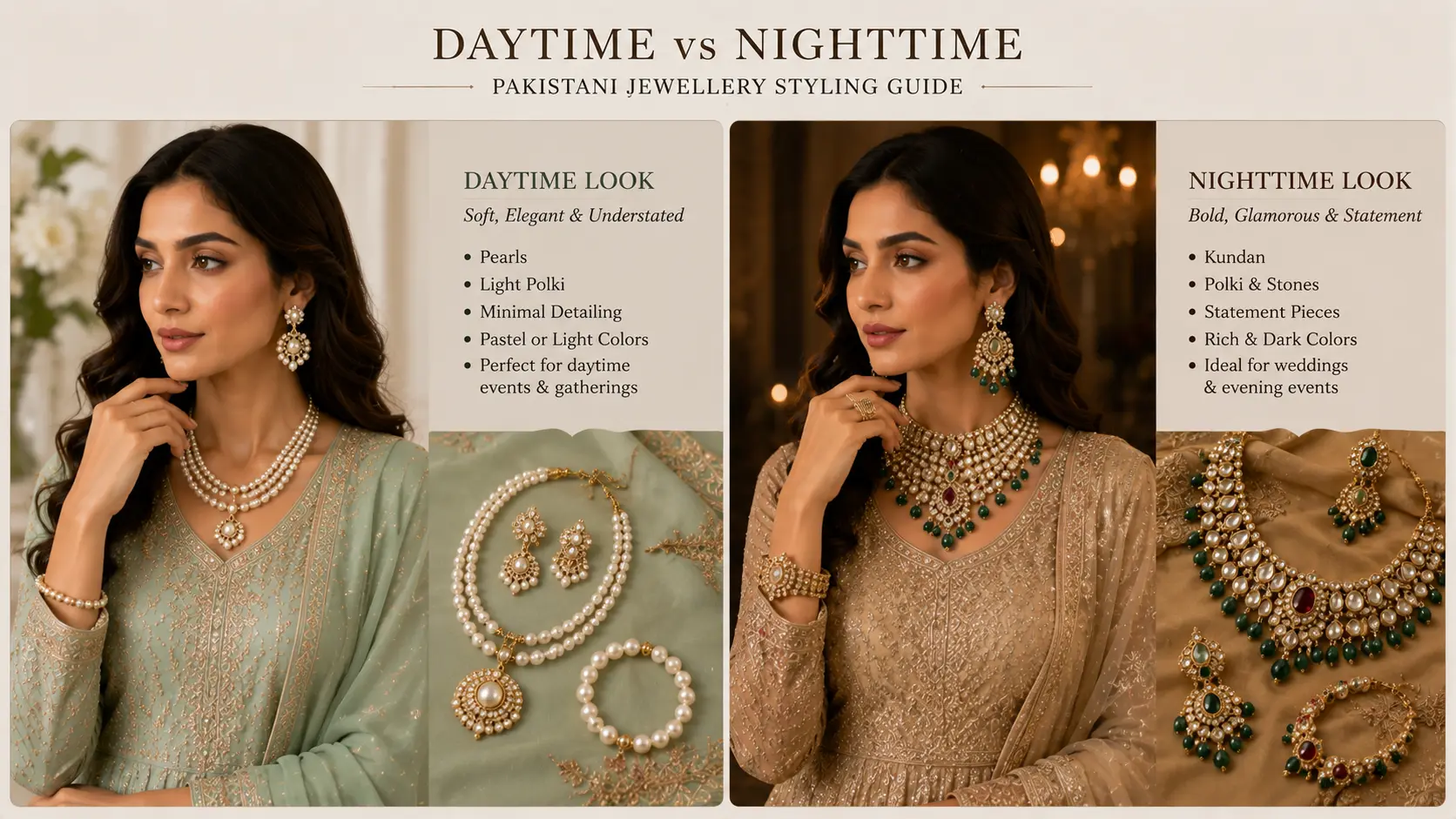
Event setting changes what looks appropriate. Daytime gatherings usually suit lighter pieces with less shine, while evening events can handle deeper tones, diamonds and stronger sparkle.
For intimate family events, a refined single statement often looks more tasteful than a full bridal-style set. For weddings and formal receptions, you can scale up with layered necklaces, tikka and richer stones as long as the outfit supports it.
- Day events: Pearls, small kundan, minimal chains and slim bangles.
- Night events: Polki, heavier kundan sets, darker stones and structured chokers.
- Formal dinners: Clean metal lines with one standout element such as earrings or a bracelet.
Lighting also matters, so check shine and reflection under the venue style you expect.
Align Jewellery With Makeup And Hairstyle
Jewellery should work with the face framing created by hair and makeup. A sleek bun exposes the neck and ears, so chandbalis, jhumkas and tikkas become more prominent.
When hair is down or styled in soft waves, choose earrings with enough length and movement to stay visible. If makeup is bold, keep jewellery cleaner and if makeup is soft, allow jewellery to add definition.
- Center parting: A tikka sits naturally and looks symmetrical.
- Side parting: A jhoomar can become the feature, with simpler earrings.
- High bun: Longer earrings and a choker create a polished frame.
These choices keep the face as the focal point while letting the outfit details shine.
Get The Fit Right For Comfort And Polish
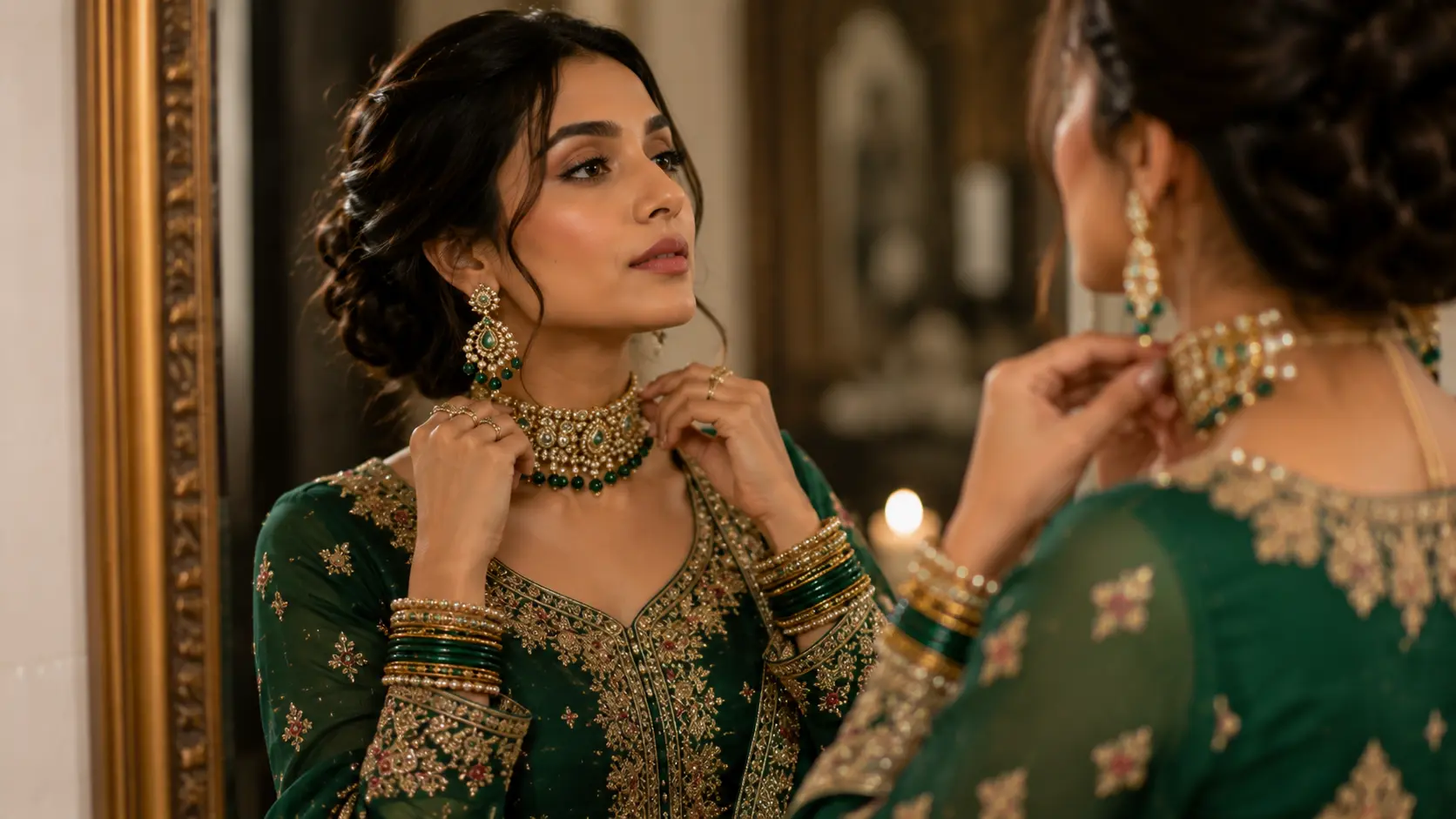
Even the best jewellery looks off when it sits wrong. Chokers should rest comfortably without lifting, earrings should not pull and bangles should not snag on sleeves or embroidery.
Check for sharp edges, loose stones and noisy clasp movement before you leave. A secure fit helps posture and confidence, which always improves how the full look comes together.
- Necklaces: Adjust length so it sits above heavy neckline work, not on top of it.
- Earrings: Use support patches for heavy pieces to prevent drooping.
- Bangles: Choose sizes that slide smoothly over the hand without scraping fabric.
Comfort makes it easier to wear a statement piece for hours without constantly fixing it.
Conclusion
To match jewellery with Pakistani dresses, start with the outfit’s fabric and embroidery, then follow the neckline and overall silhouette. Choose a metal tone that suits the dress undertone, coordinate stones with restraint and build around one main statement piece.
Keep the occasion, hairstyle and comfort in mind so the look stays elegant and effortless. When each element supports the others, the final styling feels complete without looking overdone.