
Blog
How to Clean Artificial Jewellery at Home Safely


Why Artificial Jewellery Needs A Different Cleaning Approach?
Artificial jewellery often has plated finishes, glued stones, painted details and mixed base metals. These materials can react quickly to harsh cleaners, soaking and rough scrubbing.
A safe home routine focuses on gentle contact, minimal moisture and fast drying. That prevents dullness, peeling plating and loose stones while still removing oils and residue.
Know Your Materials Before You Start
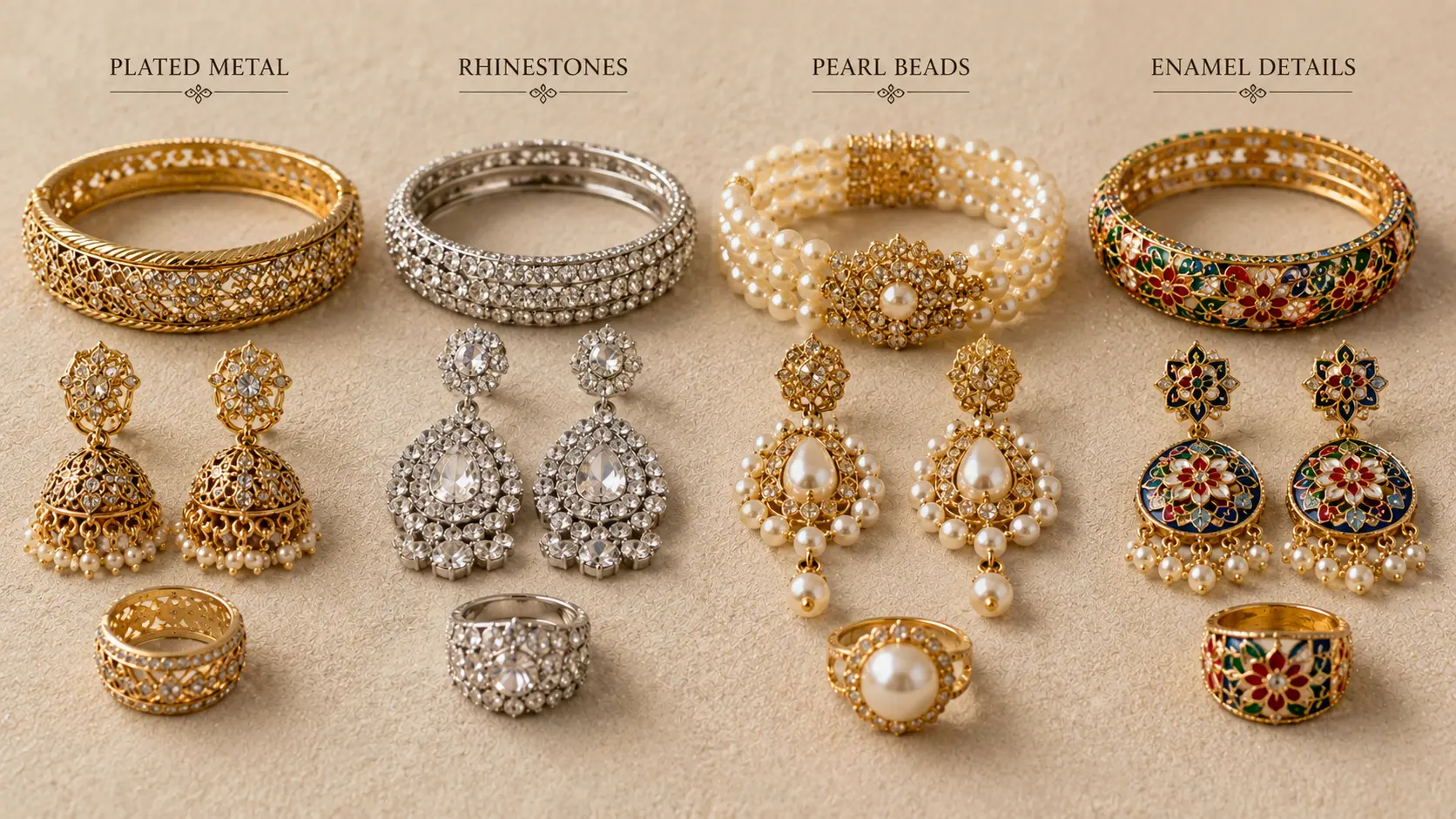
One pair of earrings can include several materials with different limits. Checking construction first helps you choose the mildest method that still works.
Look for areas where stones are glued, not prong set and notice any flaking or greenish tint. If the coating is already lifting, aggressive cleaning can speed up damage.
- Plated metal: Thin surface layers can wear off when exposed to abrasives, strong acids, or frequent polishing.
- Rhinestones and crystals: Many are foil-backed and lose shine when water gets behind the setting.
- Pearl-look beads: Their coating can cloud if scrubbed or soaked.
- Enamel and painted details: They can soften with solvents and repeated exposure to hot water.
Once you know what you are working with, you can clean only what is needed and leave delicate areas untouched.
Tools And Supplies You Can Use Safely
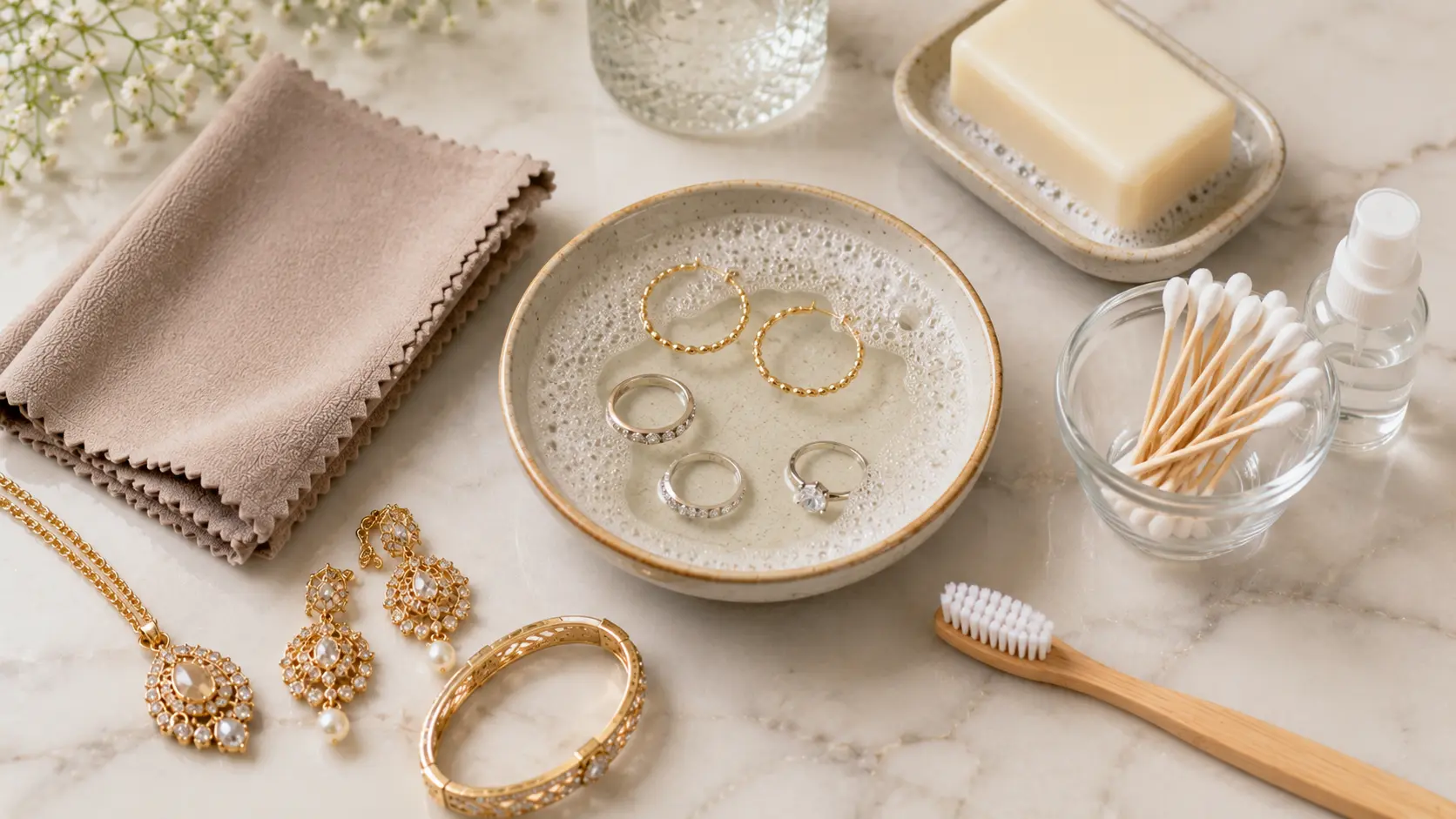
You do not need specialty products to clean artificial jewellery at home. The goal is controlled cleaning with soft tools that will not scratch or pull at settings.
Keep a small kit so you are not tempted to use harsh shortcuts.
- Microfiber cloth: Lifts skin oils and dust without abrasion.
- Cotton swabs: Reaches crevices around stones and clasps.
- Soft toothbrush: Use only for sturdy pieces and very light pressure.
- Mild dish soap: Cuts body oils with minimal residue when diluted.
- Baking soda paste: Only for unplated, non-painted metal parts and only when needed.
- Isopropyl alcohol on a swab: For spot cleaning metal areas away from glue and coatings.
Use separate cloths for metal and for stones so you do not drag grit across a shiny surface.
Quick Safety Checks Before Cleaning
Small checks prevent most accidents. They also help you decide whether to dry-clean with a cloth or use a damp method.
- Inspect For Loose Parts. Gently wiggle stones, jump rings and hooks. If anything moves, skip wet cleaning and handle it as fragile.
- Test An Inconspicuous Spot. Try your chosen method on the back or inner edge. Stop if color transfers to the cloth or the finish turns dull.
- Remove Tangled Hair And Threads. Use a dry swab or tweezers to lift debris. Pulling can distort chains and weaken links.
These checks take a minute and protect the finish more than any cleaner can restore.
Gentle Cleaning Method For Most Artificial Jewellery
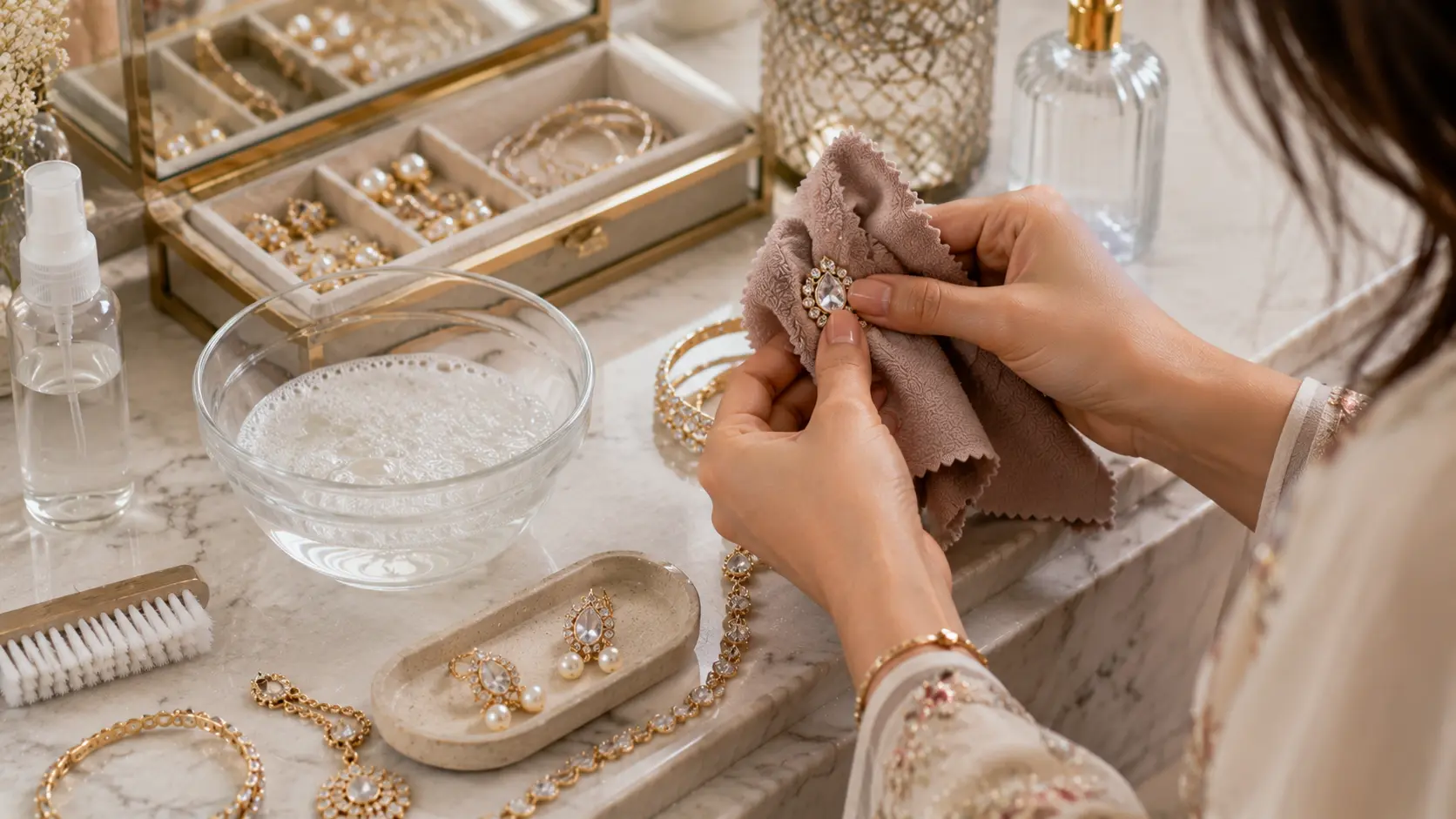
This approach works for common plated pieces, fashion chains and everyday earrings when there are no loose parts. It uses minimal water and keeps moisture away from glued settings.
Prepare a small bowl of lukewarm water with a drop of mild dish soap. Keep a dry towel nearby so you can dry immediately.
- Wipe Off Surface Dust. Buff lightly with a dry microfiber cloth to remove grit that can scratch.
- Dampen The Cloth, Do Not Soak The Piece. Dip a corner of the cloth in the soapy water and wring it well. The cloth should feel barely damp.
- Clean In Short Strokes. Wipe metal areas first, then detail zones. Use cotton swabs for crevices and around clasps.
- Rinse With A Clean Damp Cloth. Use a different cloth corner with plain water, again well wrung, to remove soap film.
- Dry Immediately And Thoroughly. Pat with a dry cloth, then air-dry on a towel in a shaded, ventilated spot.
When you keep moisture low and dry quickly, you reduce tarnish, discoloration and cloudiness near stones.
How To Clean Pieces With Stones And Glue Settings?
Glued stones are common in artificial jewellery and they dislike water. Excess moisture can soften adhesive and leave residue behind the stone, which reduces sparkle.
Choose dry methods first and use spot cleaning only when necessary.
- Use A Dry Microfiber Cloth First: Buff around stones and along edges to lift oils.
- Use A Slightly Damp Swab For Metal Only: Clean the metal rim around stones while avoiding the stone base and undersides.
- Avoid Soaking Entirely: Even short soaking can wick water into settings and behind foil backs.
If a stone looks cloudy, stop and focus on careful drying rather than adding more liquid.
How To Clean Tarnish Without Ruining Plating?
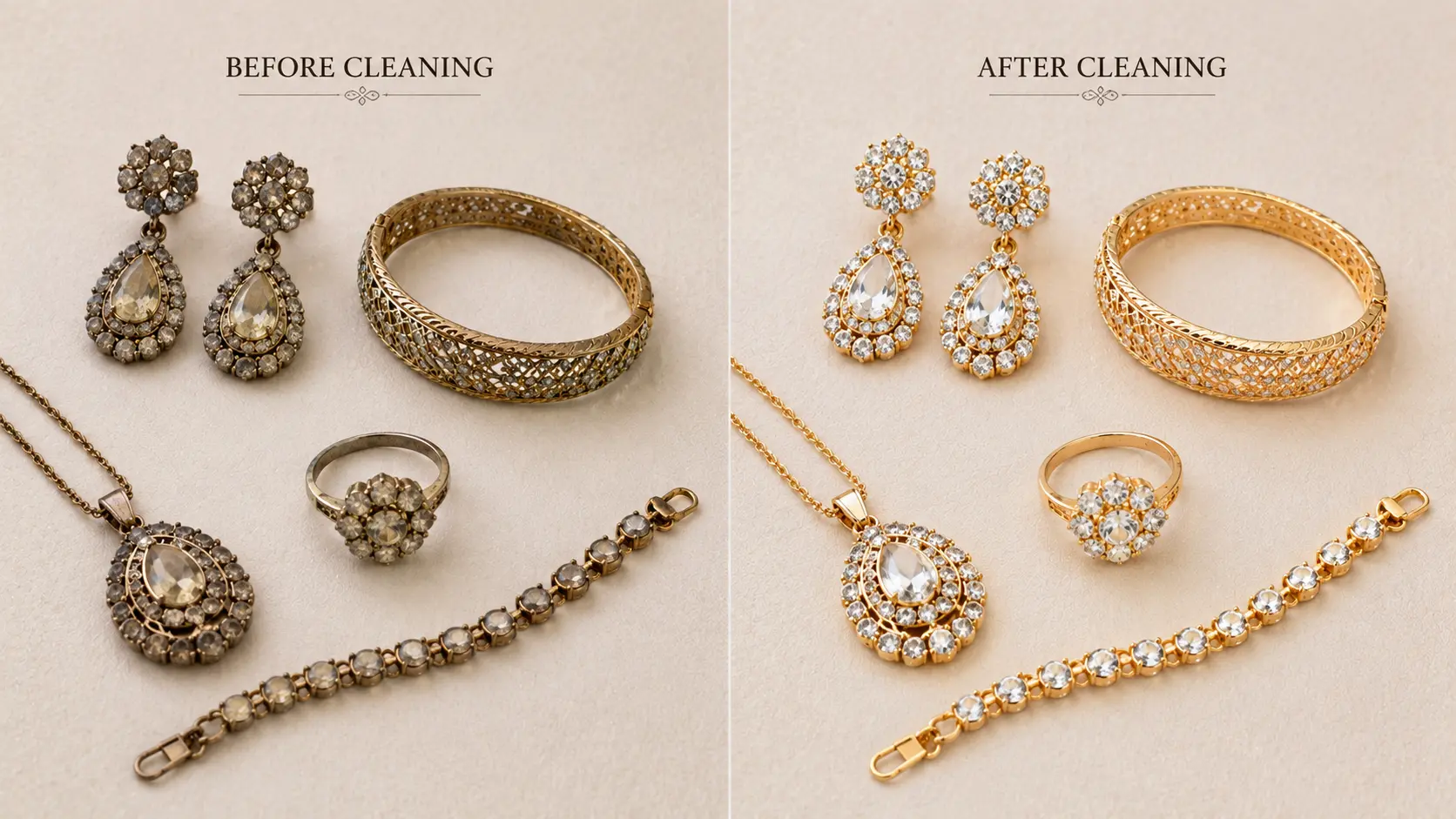
Some darkening is simply skin oils mixed with dust. That often comes off with mild soap and a soft cloth, which is the safest option for plated jewellery.
True tarnish or oxidation on base metal needs a more careful touch, but plating limits what you can do.
- For Plated Pieces: Use only the gentle method and a dry buff afterward. Polishing compounds can strip thin plating quickly.
- For Unplated Metal Parts: Use a tiny amount of baking soda paste on a cotton swab and rub lightly, then wipe clean and dry fast.
- For Dark Crevices: Use a barely damp swab with mild soap, then a dry swab to remove moisture.
If tarnish returns quickly, storage habits usually need improvement more than cleaning strength.
What To Avoid When Cleaning Artificial Jewellery?
Many common household products are too strong for fashion finishes. They can also trigger discoloration that looks like permanent tarnish.
- Hot Water: Can loosen glue and warp some plastics.
- Vinegar Or Lemon Juice: Acid can etch coatings and dull stones.
- Toothpaste: Abrasives scratch plating and leave residue in settings.
- Bleach Or Ammonia: Can strip finishes and weaken metal.
- Alcohol Baths: Alcohol can affect painted details and adhesives when used broadly.
- Ultrasonic Cleaners: Vibration can shake loose stones and crack coatings.
When in doubt, choose less liquid, less pressure and less time.
Drying And Polishing For A Long-Lasting Shine
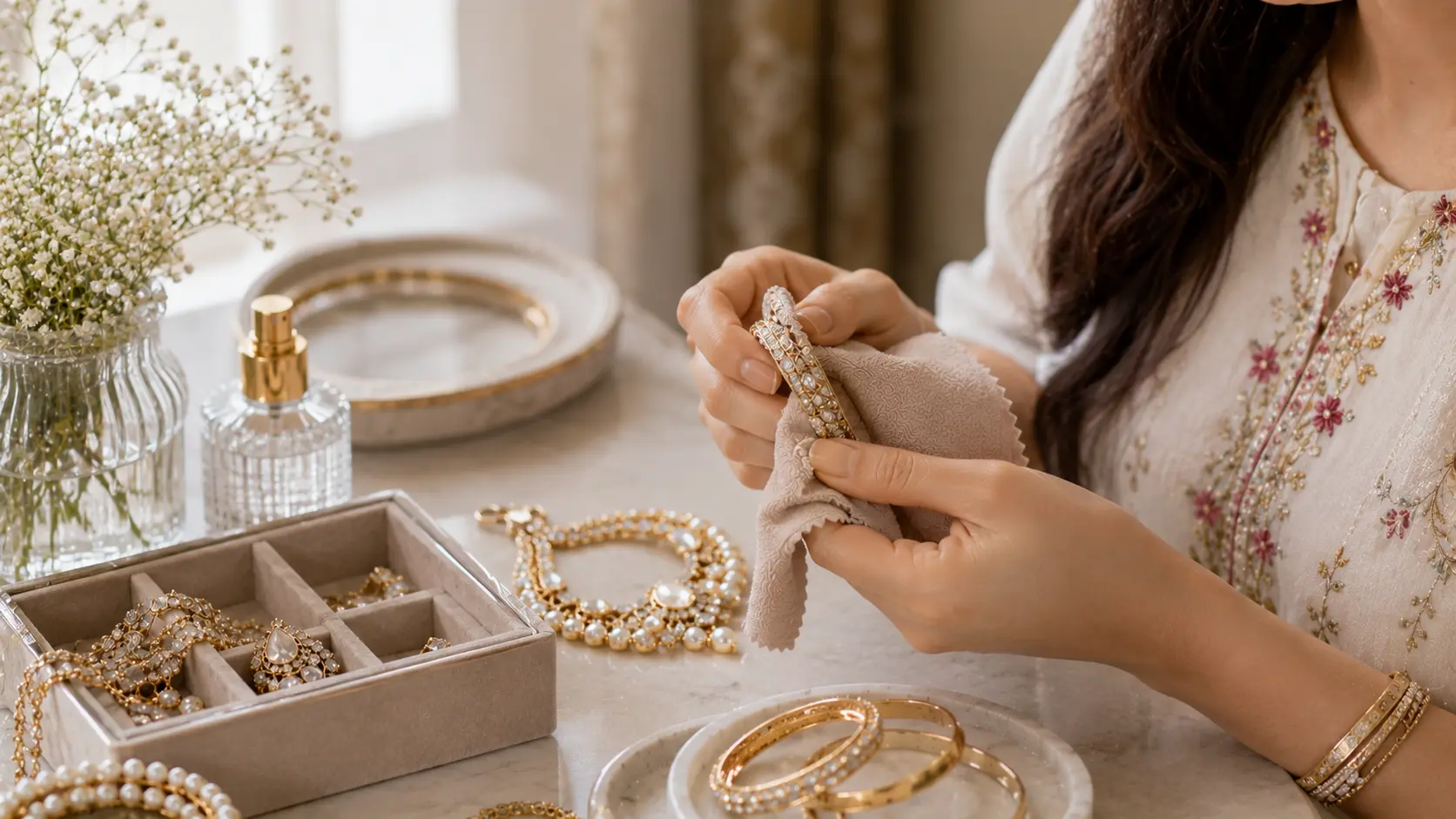
Drying is where most home cleanings succeed or fail. Moisture trapped at joints and behind settings causes dullness and can create green marks on skin.
After towel drying, let pieces rest on a clean cloth until fully dry. A final gentle buff with a dry microfiber cloth brings back shine without removing plating.
Cleaning Frequency And Simple Care Habits
Frequent aggressive cleaning wears down coatings faster than normal wear. A lighter routine done regularly is safer and keeps buildup from becoming stubborn.
Wipe pieces after each wear and do a deeper gentle clean only when you notice residue or dullness.
- Put Jewellery On Last: Perfume, hairspray and lotion can stain finishes.
- Take Jewellery Off First: Before washing hands, showering, or cleaning with household chemicals.
- Store Separately: Prevent scratches by keeping pieces in individual pouches or compartments.
These habits reduce tarnish triggers and cut down how often you need wet cleaning.
Safe Methods At A Glance
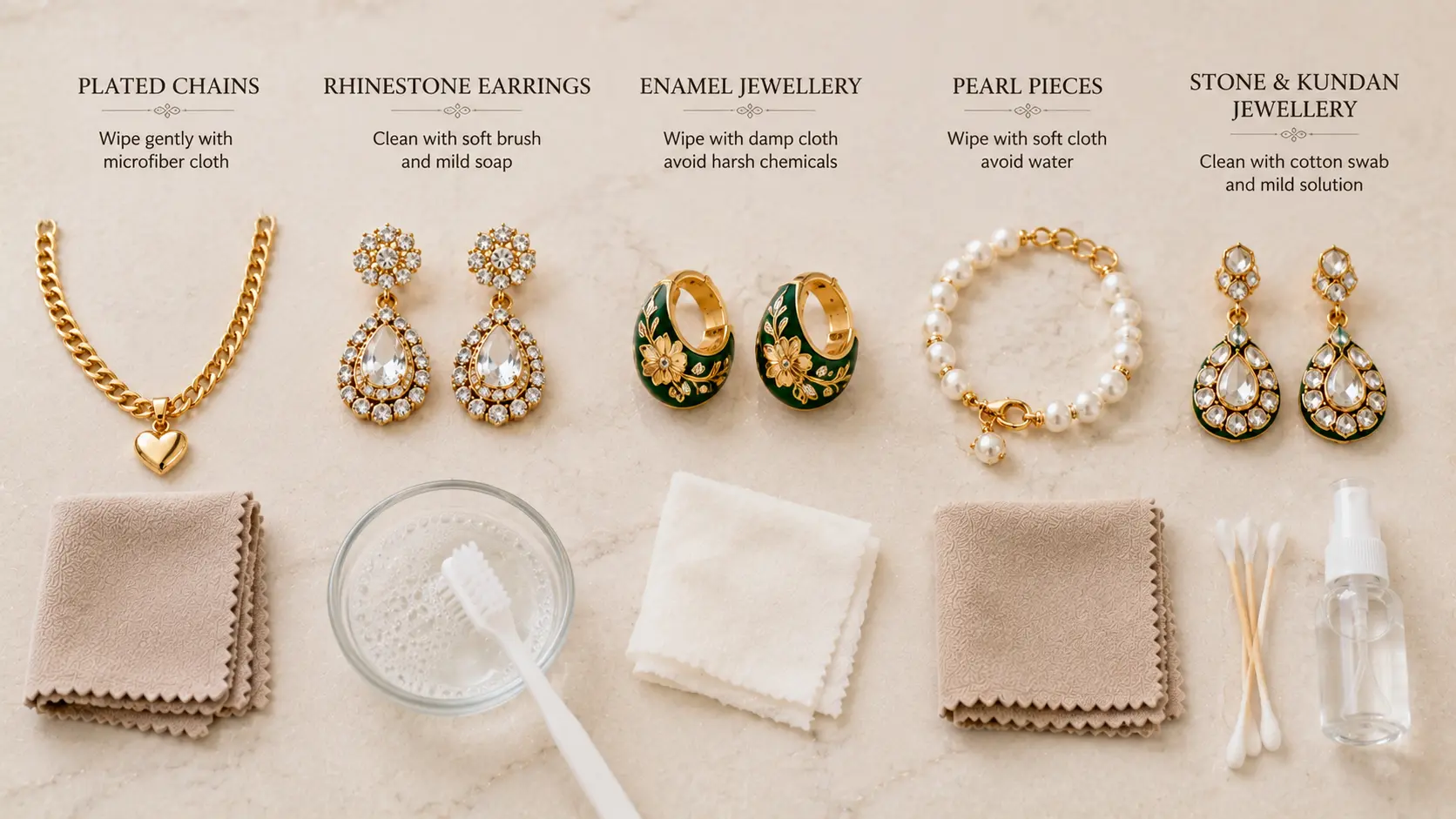
This table helps you match the cleaning method to the jewellery type. Choose the gentlest option that fits the material and construction.
| Jewellery Type | Safest Cleaning Method | What To Avoid |
|---|---|---|
| Plated chains and pendants | Microfiber wipe plus barely damp soapy cloth, then quick dry | Abrasive polish, soaking, toothpaste |
| Rhinestone glued settings | Dry cloth buff and swab around metal edges only | Water immersion, alcohol bath, ultrasonic cleaning |
| Enamel or painted pieces | Dry wipe and spot clean with mild soap on a wrung cloth | Solvents, scrubbing, hot water |
| Unplated base metal parts | Mild soap wipe, optional tiny baking soda on swab, then rinse wipe | Strong acids, long rubbing, harsh chemicals |
Use the table as a quick checkpoint before you reach for any cleaner or tool.
Conclusion
To clean artificial jewellery at home safely, focus on gentle wiping, minimal moisture and immediate drying. Mild soap and soft tools remove oils and grime without stripping plating or loosening stones.
Skip soaking and harsh household cleaners and store pieces separately to prevent scratches and fast tarnish. With steady care, artificial jewellery can keep its shine and color longer between cleanings.